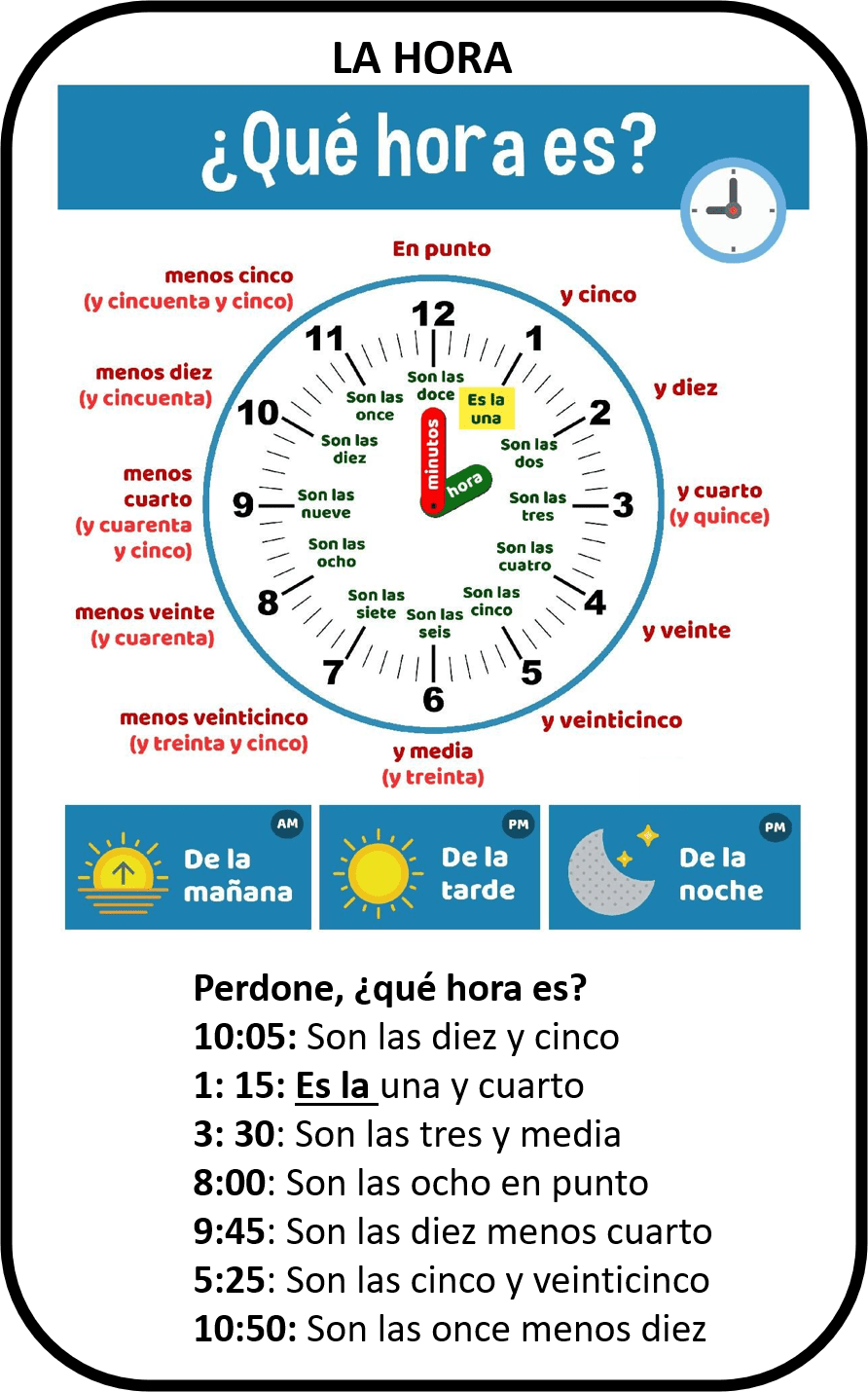
If you have looked at the image carefully, you will have realized that it is muy fácil (very easy). There are only tres things you must remember:
1. To ask, we say: ¿Qué hora es? what time is it? And the answer is “son las“ for all hours, because they are plural, and “es la una” for 1:00, because it is an hour in singular. If we translate it literally, “es la una” means “it is one o´clock” because it is an hour in the singular, and “son las …” means “they are” for all the others, because they are hours in the plural. Remember: “es la una” – “son las…”
1:20 → Es la una y veinte
8:10 → son las ocho y diez
2. Los minutos (the minutes) are said with the number, normally using “y “ (and) when they are “positive” (it is like saying in English “it is two and twenty minutes”), and using “menos ” when they are “negative”, literally “it is seven minus ten minutes“:
3:05 → Son las tres y cinco (and) 3h + 5 min
5: 50 → Son las seis menos diez (minus) 6h – 10 min
3. There is a special way to say “o’clock” and “quarter” hours: en punto (o’clock), y cuarto (+ quarter past), y media (and a half), menos cuarto (- quarter to).
7:00 → Son las siete en punto
9:15 → Son las nueve y cuarto
2:30 → Son las dos y media
12:45 → Es la una menos cuarto (1 hour minus one quarter)