En España we have uno o dos nombres (names), especialmente women. Normalmente Maria is one of them porque (because) in the old days en España, the Catholic Church forced to call María (Mary) to every woman when they were baptized.
For this reason, many people are called María and another nombre, like me, mi (my) nombre is María Elena, or my sister Ana María.
Afortunadamente (fortunately), that rule doesn’t work longer today, in addition to fewer and fewer children being baptized.
We all have dos apellidos (two surnames), the first comes from our father, and the second from our mother: so, si (if) Antonio García Fernández y (and) María Luisa López Pérez had a daughter, she would be called Carmen (for example) García López.
From some years ago, the law allows couples to change the order and give the child mother’s surname first: Carmen López García, in order to equal rights between men and women. 💪🏼
Hay (there are) dos ways to ask someone por el nombre :
1. ¿Cómo te llamas? Yo me llamo Elena
The literal translation of this phrase would be: “How do you call yourself? I call myself Elena”.
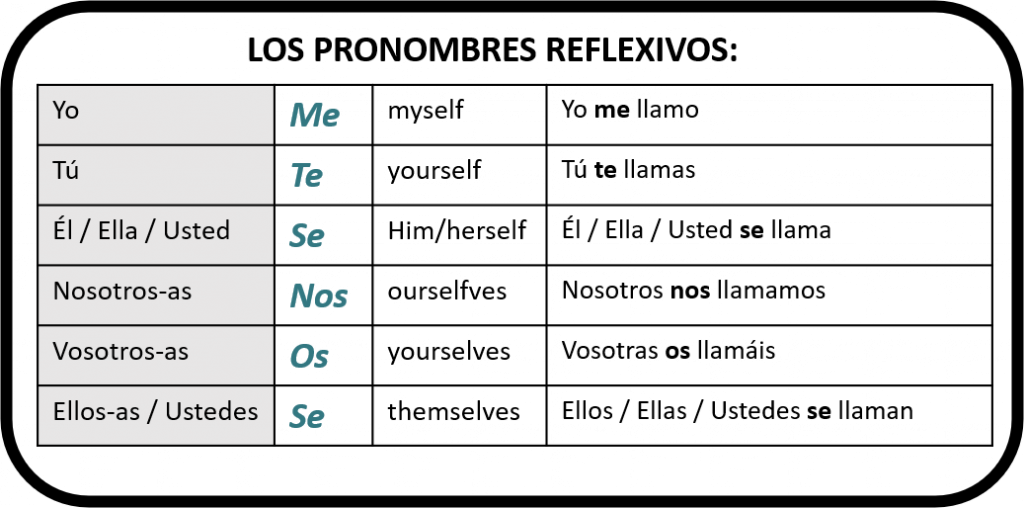
This is the literal translation of the verb “llamarse” = “to call yourself”, because “llamar” is “to call”; the “se” is the reflexive particle: “oneself”. For the first person singular, the reflexive is “me” = “myself”. I’ll give you an example:
–Yo llamo a Elena – I call Elena
–Yo me llamo Elena – I am (my name is) Elena
It is like “I call myself” to say what is my name. I know it, it doesn’t make sense for you, pero… it is like that! Pero (but) don’t worry for the moment, we will see the reflexivos later on the módulo.
2. ¿Cuál es tu nombre? Mi nombre es Elena
What is your name? My name is Elena.
Por favor (please), note that we don’t use “Qué” (What) but “Cuál ” (which) to ask for the name, so literalmente translated we say “which is your name? My name is…“.
Note also that in this phrase we have used a possessive: mi = my