I have a date! But, when???

     Okay, think about this: You have met an Andalusian who wants to invite you to have dinner in a very typical restaurant, so that you can try the local dishes of that area. 

     He told you the day and time, but you didn’t understand him very well and now you don’t know when you will meet and you miss this unique dinner with a local person. 

     Sad, isn’t it? You can’t afford to miss this opportunity!

     La fecha (the date) is a muy importante (very important) topic. Por qué is it so importante to know cómo to say and recognize specific fechas (dates)?  

     I’ll give you another ejemplo : Qué would happen if you come to Cádiz and someone tells you that “el doce de abril ” there is a muy importante event? 

     You won’t know when it is and you will miss it! And, as you are here to enjoy our beautiful land and culture, you don’t want that, right? 

     So we are going to study them as soon as possible so that you won’t miss anything.

     To learn how to say fechas, we need to know the numbers, the days of the week and the months. 

     Okay, we should also know the seasons, and we are going to learn them too. It is not difficult at all, you will see. Let’s go there!

LOS NÚMEROS : The numbers

     Ah, numbers! Every time I hear that word, it comes to my mind the Sesame Street character that counted nonstop and laughs every time he completes a series of numbers. 

     In Spanish, he was called “el conde Draco“, I imagine that in comparison with the real “Dracula”.

     Wait, I’m wondering that maybe I’m telling you this and you don’t even know what I’m talking about! Could it be that I’m getting older? 😓

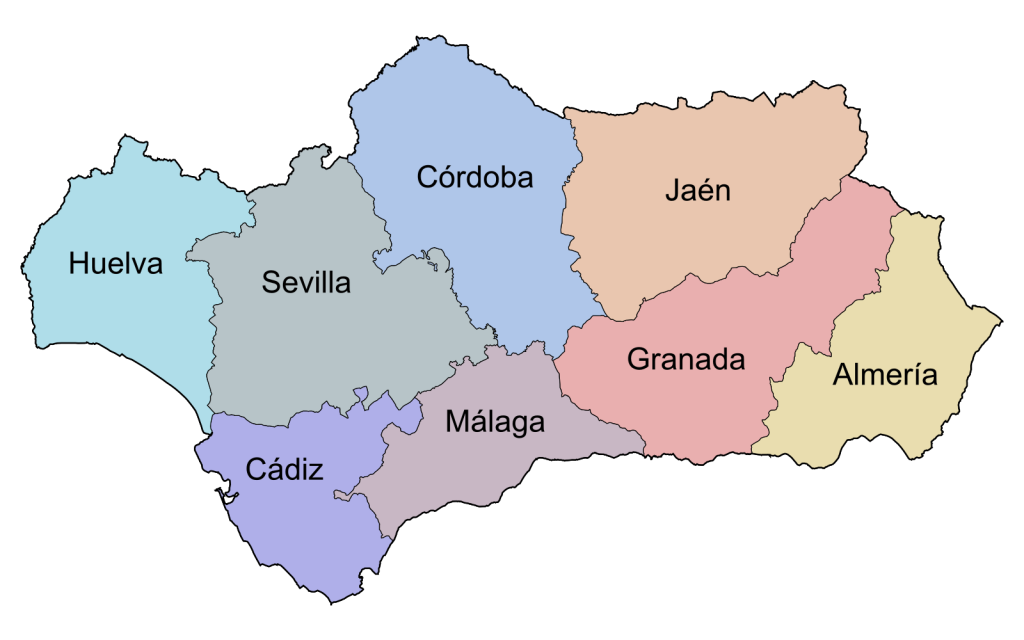
     In any case, I’ll give you the first example: OCHO (eight). The provinces of Andalusia are eight, and here is a map to see how they are called. 

     You might even know some of them if you have already come to Andalusia!

     You have to study los números to know them, pero you will love to know that hay (there are) some tricks to remember them. 

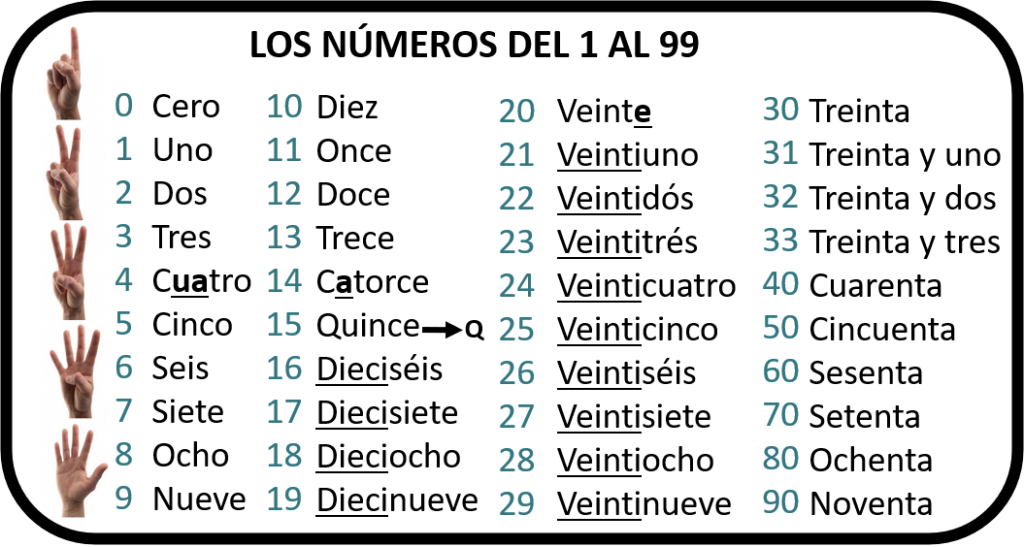
     My students have siempre (always) made the same mistakes con los números, so I will show you how to avoid them from the beginning. Look at the following tabla (table):

      
It is not difficult, aquí (here) you have some tricks to avoid making mistakes:
  1. Cuatro (4) is written with UA, but catorce (14) only has an A

  2. Quince (15) is the only number that uses the letter Q (remember, it sounds like a “K”, and you don’t say the “u”, so it’ll be like “kince”)

  3. From 11 to 15 all end in -CE

  4. From 16 to 19 they all start with DIECI-

  5. Veinte (20) ends in -E, but in the rest of the 20’s that changes into -I (veintiuno) (It is like saying veinte Y uno” but all together: veinteyuno” –> “veintiuno“)

  6. From 21 to 29 you will only have to learn VEINTI-

  7. For the rest of the number you will only have to learn the round number and then add “y + number”: In example, 55 → cincuenta y cinco (y = and)

  8. Up to number 30, numbers are written with a single word. From there, the numbers that are not round (40, 50, 60…) are written with 2 numbers joined by the letter Y (and), 3 words in total: cuarenta y ocho.

¡ATENCIÓN!
     The number 1 (uno) changes when it goes before a noun. If the noun is masculine, it is written “un”, but when it is feminine, it is written “una ”:
Un tomate = One tomato, a tomato
Una mesa = One table, a table

     Could you remember these tricks? No te preocupes! Don’t worry!, by doing the ejercicios you can practice them until they stay inside your head. 

     Pero (but) do not worry if you don’t know all 100%, the use throughout the modules will make you automate them. 😉

     Great! Let’s move on! Please note that below there are 2 exercises. In the first one, you should write what you hear with LETTERS, and in the second one with NUMBERS. To navigate through them, click on the green arrow on the right of the ejercicio. 

¡SPELLING!
Check this box out! It will help you to complete the writing exercises easily. You will find this box just before every writing exercise, so that you can copy and paste the characters with the accent marks more easily.
á - é - í - ó - ú - ü - ñ - ¿ - ¡

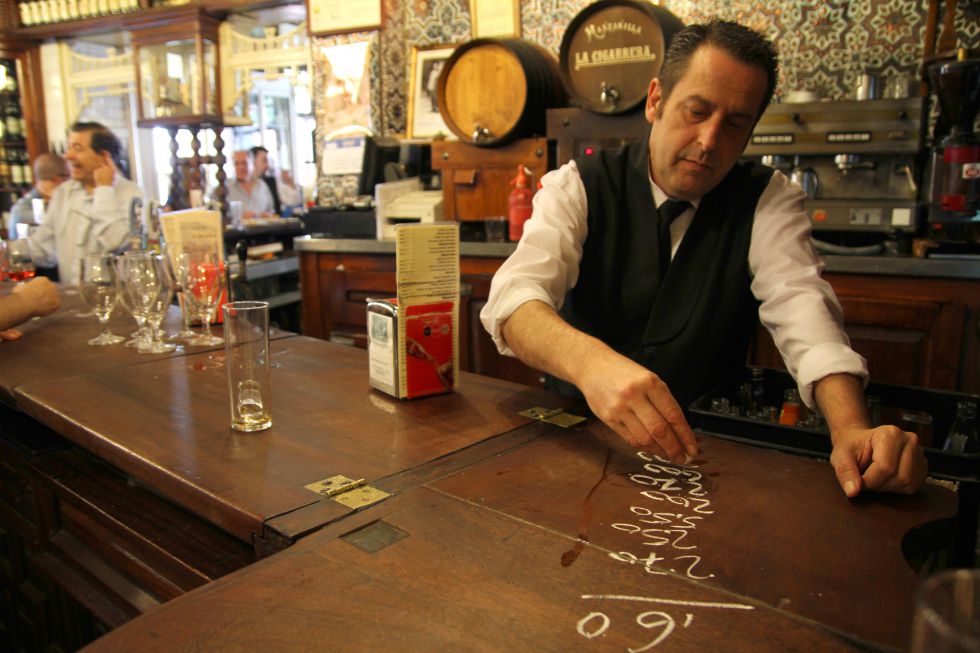
     WAIT! Take a rest, I don’t want that your head blows up, hehe. Have a look at the picture beside, amazing, uh? I know! Even to me it IS amazing. 

     Nowadays there are still some “traditional” bars where they write the bill ON THE BAR WITH A CHALK! I’m sure you’ll see with your own eyes if you come to Andalusia. OK, now take a deep breath and continue with the rest of los ejercicios. 

     Phew! You’re sweating, huh? But you did it great! You’ve finished this part. 

     Now it’s time to get energized! Come on! 😉

I come from the future, can you tell me WHEN we are?

     I’d love that! Can you imagine? A person from the future coming to Andalucía ? I’m sure that 5 minutes later he’d be drinking orange wine and dancing “sevillanas”! 😂

     OK, now que you have pictured this person coming to Andalucía from the future, how could you answer him if he ask you: Perdone, ¿en qué mes estamos? (Excuse me, what month is it?).

     I’m sure you’d love to answer him and then, ask him about the next winning lottery number, uh? 😄 Pero (but) if you don’t know the months in Spanish, you could not get your lottery number back!

     OK, now speaking seriously, It is very unlikely que una persona from the future will come, but it may happen que un Andaluz will tell us que in the month of May there is a very important festival. Would you like to miss it? Surely not! So let’s look at the months in Spanish so that you can distinguish them in a conversation.

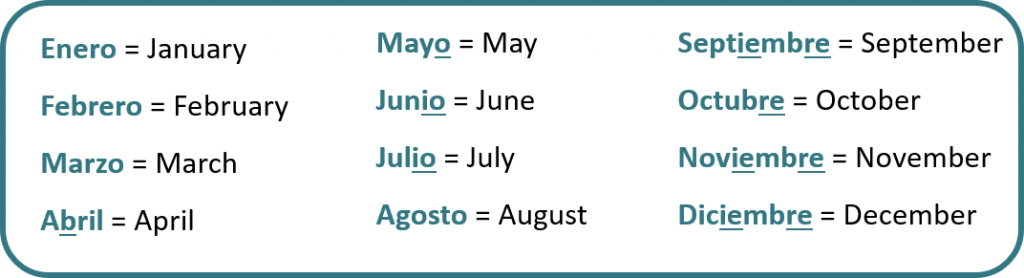
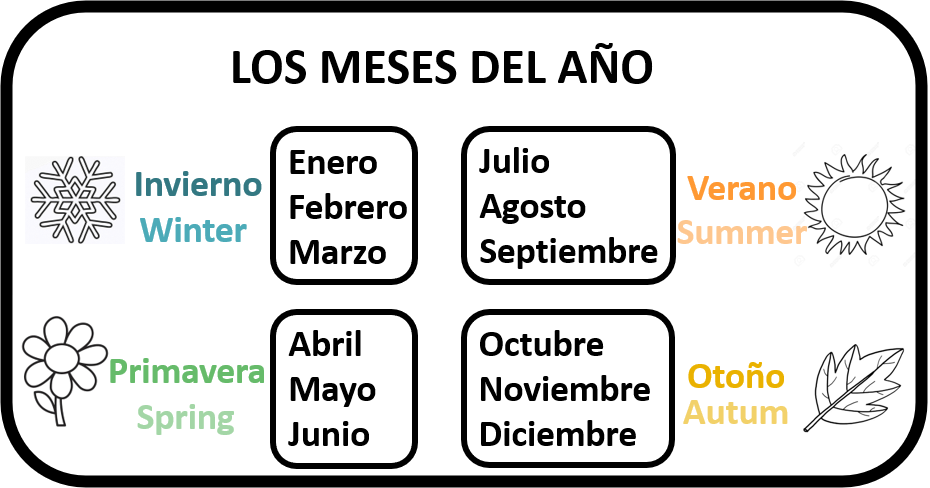
     Hay (there are) no tricks to learn los meses (the months), pero think que many of them resemble la palabra inglesa (the english Word), so you really only have to remember some of them.

     Read them carefully trying to perceive the differences between la palabra inglesa y la palabra española.


     Aquí  (here) you have another image con (with) the seasons of the year included. Read them to remark the sound cuando (when) you see them. 

     Sometimes hay (there are) posters on the streets donde (where) you can see the “festivales de primavera-verano”. You will have to know qué (what) those palabras mean !!!

     (Have you remark the difference of that lastqué ? Exactly! It is the question word, and it has the accent mark. Don’t forget that!)

     Without a doubt, spring in Andalusia is the best season of the year to come. Why? Because there are several very important festivals, such as “la feria” and Easter, which are festivals that everyone should see at least once in their lives.

     And I’m telling you so you don’t miss them! It has happened to me in some of my trips that, not knowing that there was an important festival, I have missed it, and I have only known it when I have left the place. 

     How frustrating that is! But don’t worry, because our “Plan” is designed precisely so that this doesn’t happen to you. 

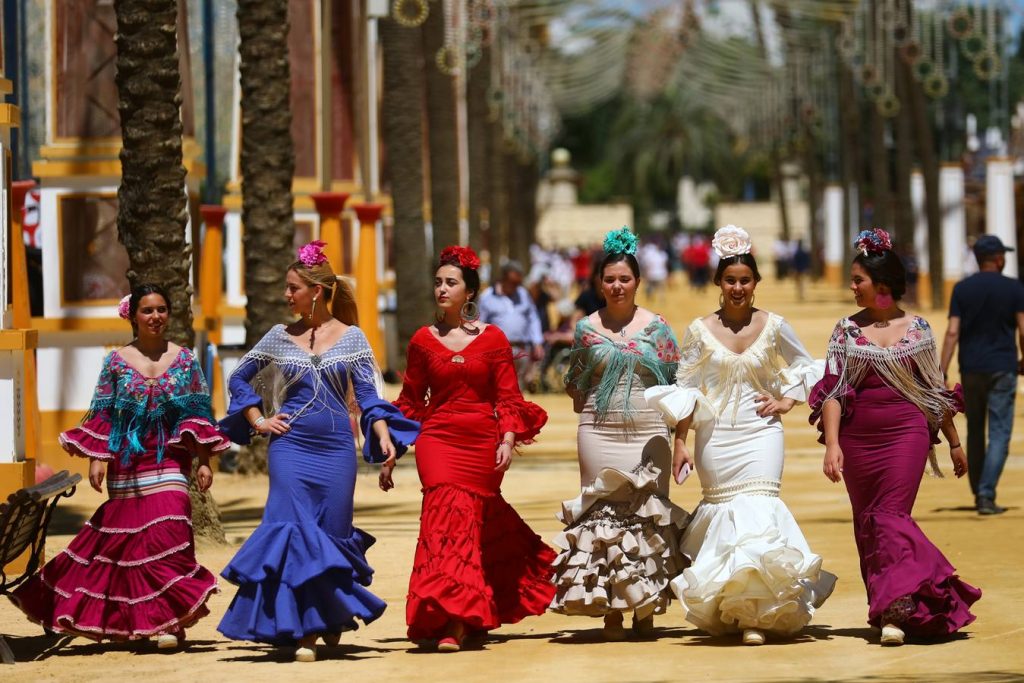
La Feria is one of the most beautiful festivals in Andalucía

     Ahora (now) you have to go back to your cuaderno and write los meses and las estaciones (the seasons).

     It doesn’t matter if you look at them, remember that the important thing is that, as you write it, you will internalize it better.

     I recommend you to write it down a couple of times, but don’t worry, it depends on the time you have. When you finish, you can do the ejercicios de abajo (below).

¡SPELLING!
Check this box out! It will help you to complete the writing exercises easily. You will find this box just before every writing exercise, so that you can copy and paste the characters with the accent marks more easily.
á - é - í - ó - ú - ü - ñ - ¿ - ¡

LOS DÍAS DE LA SEMANA: The days of the week

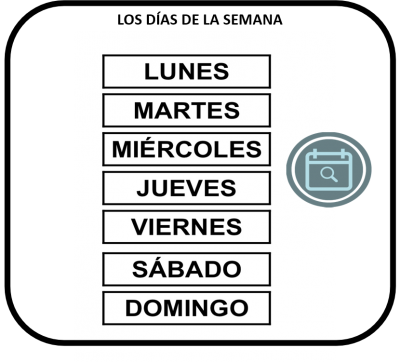
     Los días de la semana are the last step we have left to know cómo (how) to say las fechas (dates). 

     Certainly, los días de la semana en español are nothing like los días de la semana en inglés, so you will have to learn them, although doing los ejercicios is siempre (always) easier. 

     Read and listen to them, and after that, write them, as always, a couple of times. And after that, go and do los ejercicios.


     “Burn” this phrase into your mind: Fin de semana(weekend). This expression marks the beginning of the best part of the week for Andalusians. 

     The weekend (which for us starts on Friday afternoon after work), is the time to go out with friends or family for a drink, to sit on a terrace under the sun to drink a very cold beer or a good glass of red wine, and to relax and forget all the problems you’ve had during the week. 

     In Andalusia there are so many bars that you won’t know where to sit to have a “tapa“. My recommendation: Where it is full of local people, there is a good place for sure!

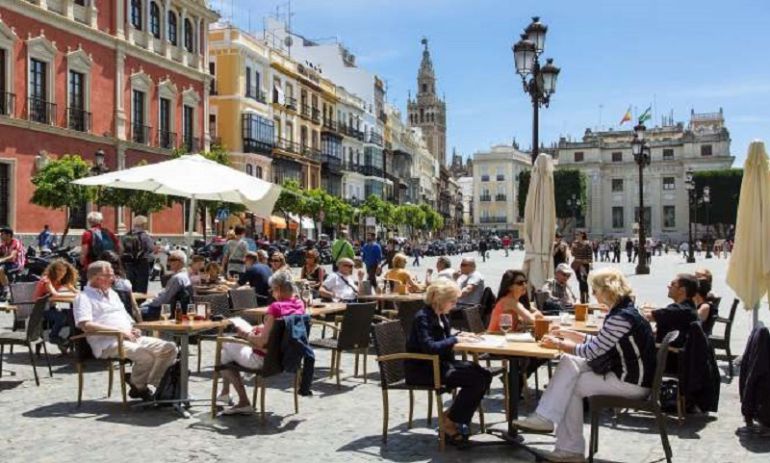
The bars in Andalucía are always full

     Por favor (Please), note there are diferentes ejercicios below. After complete each one, just click on the green arrow at your derecha (right).

¡SPELLING!
Check this box out! It will help you to complete the writing exercises easily. You will find this box just before every writing exercise, so that you can copy and paste the characters with the accent marks more easily.
á - é - í - ó - ú - ü - ñ - ¿ - ¡

     Y ahora (and now), if I tell you que el martes doce de marzo hay un evento muy importante en Málaga  (tuesday, March 12th there is a very important event in Málaga), what do you think? 

      You already know exactly what date we are talking about. Isn’t that amazing? You have understood a whole frase almost at the end of the first módulo! 

     But, to reinforce your knowledge, let’s do los últimos ejercicios.

¡SPELLING!
Check this box out! It will help you to complete the writing exercises easily. You will find this box just before every writing exercise, so that you can copy and paste the characters with the accent marks more easily.
á - é - í - ó - ú - ü - ñ - ¿ - ¡

     And now, what if I tell you some date: miércoles, veinticuatro de agosto de dos mil veintidós. Do you really unterstand what I’m saying? I’m pretty sure you do! Congratulations! Enhorabuena!!!